
Alan Russell
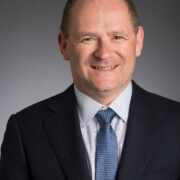 Alan J. Russell, Ph.D. is the Highmark Distinguished Career Professor at Carnegie Mellon University, where he directs the Disruptive Health Technology Institute. He was the founding Editor-in-Chief of Disruptive Science and Technology and has appeared on Rolling Stone Magazine’s list of the top 100 people who will change America.
Dr. Russell has founded three biotechnology companies and was Founding Director of the University of Pittsburgh’s McGowan Institute for Regenerative Medicine, Founding President of the Tissue Engineering and Regenerative Medicine International Society (TERMIS), and Founding Co-Director of the Armed Forces Institute for Regenerative Medicine.
Dr. Russell has participated on 24 scientific advisory boards and was the longest serving member of the Science Board to the U.S. Food & Drug Administration. He has received numerous awards, including R&D Magazine’s R&D 100 Award, three Carnegie Awards for Excellence, the American Chemical Society’s Pittsburgh Award, and the TERMIS Lifetime Achievement Award. He has published over 200 articles in refereed journals, as well as a book and 10 book chapters. He holds 14 patents and has more than 25 pending patents.
 Senator Judy Lee from West Fargo, ND was first elected to the North Dakota Senate in 1994. She has been a member of the Human Services Committee since then and has served as chair since 2001. She also has been a member of the Political Subdivisions and Government and Veterans Affairs Committees. Senator Lee was elected President Pro Tempore of the Senate in 2007. She is a graduate of the University of North Dakota with a bachelor’s degree in medical technology. Senator Lee was in the real estate business for 34 years and has been involved in many community activities. She and her late husband Duane have 2 grown children and 3 grandchildren.
 Richard N. Gottfried has chaired the NY State Assembly Health Committee since 1987 and represents a district in Manhattan. He works to expand publicly funded health coverage; protect patient autonomy, especially in reproductive and end-of-life care; and support safety-net health care providers. He sponsors the “New York Health” bill to create a state single-payer universal health plan. He’s a lawyer (Columbia, JD ’73) but does not have a private practice. Member of NY Academy of Medicine, National Academy for State Health Policy, Reforming States Group, NYC Bar Association, and NY Civil Liberties Union.
 David Matusoff is an executive at the intersection technology and policy. He has expertise in public sector, policy, start-ups and organizational transformation. In October, 2015 he became the Executive Director of the Management and Performance Hub (MPH) for the State of Indiana. MPH is the leading organization nationally helping state government transform through utilizing data, analytics, BI and consulting to improve efficiencies and effectiveness and develop data informed decision making to improve policy outcomes. He joined the MPH team and set out to change the culture of how state government performs. By working with state agencies and other partners, MPH is able to utilize world-class data science and analytics capabilities to solve problems that many Hoosier’s face. Matusoff developed a transformation plan for MPH to create a return on investment for MPH.
 Wayne Lindstrom, Ph.D. has serves as the Director of BHSD and the CEO of the BH Collaborative for the State of New Mexico. His last position was the president and CEO of Mental Health America (MHA). Dr. Lindstrom has 45 years of behavioral health experience and his doctoral degree is from Case Western Reserve University and his MSW from the University of Pittsburgh. Before joining Mental Health America, he was the CEO of a children’s behavioral health provider organization in Ohio and managed a national organizational development consulting practice. His organizational clients included public authorities, service providers, health systems, pharma, and private companies. In the 1980’s he directed addiction services for the State of Ohio and subsequently held a variety of leadership positions in managed behavioral health care. He went on to function nationally as the Director of Public Sector Operations for United Behavioral Health (UBH) which included overseeing the implementation of public sector contracts. His career began in the 1970’s when he served in the United States Air Force where he implemented and managed a drug treatment program during the Vietnam War. He has worked in community mental health settings, hospitals, emergency departments, corporate environments, and private practice while also teaching at the undergraduate and graduate levels.
 Dr. Wroth is President and Chief Medical Officer for North Carolina Community Care Networks (N3CN) which is a public-private partnership that manages NC’s Medicaid population through provider-led, community based medical home networks. Dr. Wroth practices as a family physician in a Federally Qualified Health Center where he cares for patients from cradle to grave. He is the former chief medical officer of Piedmont Health, a system of 7 FQHCs and 2 PACE sites. He also was on faculty in the department of family medicine at the University of North Carolina at Chapel Hill where he developed curriculum for residents in quality improvement and chronic disease management and taught medical students in epidemiology, the family medicine clerkship, and the new models of care selective. Dr. Wroth trained in Family Medicine and Preventive Medicine at UNC Chapel Hill. He attended medical school at Columbia University, College of Physicians and Surgeons.
 Kate Harris is the Director of Policy and Research for Connect for Health Colorado, Colorado’s state-based health insurance marketplace. In this role, she oversees the organization’s public policy development, legislative affairs, and a variety of strategy and research initiatives. Prior to joining Connect for Health Colorado, Kate was a Policy Analyst at the Washington Health Benefit Exchange. She earned her BA in Political Science and Comparative History of Ideas from the University of Washington and a Masters in Public Administration from the University of Washington Evans School of Public Policy and Governance.
 Stuart Hudson currently serves as the Managing Director of Healthcare and Fiscal Operations for the Ohio Department of Rehabilitation and Correction, ODRC. In 1994, Stuart began his long and successful career with the ODRC that continues to his current position. Initially, he served within the Department of Parole & Community Services as a Parole Officer. During his tenure, he has successfully navigated through ODRC by serving in various assignments including; Assistant Inspector, Inspector, Correctional Warden’s Assistant, Bureau Chief of Construction Activation, and Warden at several facilities. In his current capacity, Stuart oversees all healthcare and the overall ODRC fiscal management.
 Mary Beth has a wealth of experience in health policy, management, and strategic planning for state and federal governments, managed care plans, and academic health systems.
 Don Blanchon began his tenure as executive director of Whitman-Walker in 2006. Before joining Whitman-Walker, he spent nine years with Schaller Anderson, a national health care management and consulting firm specializing in public-sector programs. During that time, he held positions of increasing authority, including CFO and CEO of Maryland Physicians Care, a $325 million multi-product health plan owned by four Maryland-based non-profit community health systems. From 2004 to 2006, Blanchon served as Vice President for Medicaid and Medicare programs for Schaller Anderson. Earlier in his career, Blanchon served as Vice President for strategic planning for Health Services for Children with Special Needs, a specialty health plan in Washington, DC. He also spent five years as a budget examiner in the executive office of the president at the federal Office of Management and Budget.
 For individuals living with complex, often chronic conditions, and their families, palliative care can provide relief from symptoms, improve satisfaction and outcomes, and help address critical mental and spiritual needs during difficult times. Now more than ever, there is growing recognition of the importance of palliative care services for individuals with serious illness, such as advance care planning, pain and symptom management, care coordination, and team-based, multi-disciplinary support. These services can help patients and families cope with the symptoms and stressors of disease, better anticipate and avoid crises, and reduce unnecessary and/or unwanted care. While this model is grounded in evidence that demonstrates improved quality of life, better outcomes, and reduced cost for patients, only a fraction of individuals who could benefit from palliative care receive it.
































































