
Webinar: Medicaid Alternative Payment Models for Prescription Drugs – A Look at Three States
Thursday, May 9, 2019
1 p.m. (ET)
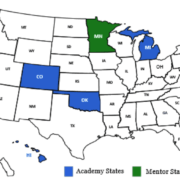
As states struggle with the increasing cost of prescription drugs, they are testing various alternative payment models (APMs) to curb costs. The Oklahoma Health Care Authority is a national leader with four APMs through direct contracts with pharmaceutical manufacturers. These contracts are each based on a specific drug, agreed upon outcomes, and approaches to measurement. Since Oklahoma began implementation, Michigan and Colorado had State Plan Amendments approved to advance similar APMs. Join this NASHP webinar to learn more about these states and their experiences engaging in APMs.
The moderator is NASHP Executive Director Trish Riley. Speakers include:
- Terry Cothran, Director, University of Oklahoma College of Pharmacy, Pharmacy Management Consultants
- Cathy Traugott, Pharmacy Manager, Colorado Department of Health Care Policy & Financing
- Trish Bouck, Pharmacy Management Division Director, Michigan Department of Health & Human Services
- Rita Subhedar, State Assistant Administrator, Michigan Department of Health & Human Services
Listen to the Dec. 12, 2019 webinar Medicaid Alternative Payment Models for Prescription Drugs: Do They Add Value for States? here.
Listen to the May 9, 2019, webinar Medicaid Alternative Payment Models for Prescription
Drugs: A Look at Three States here.


 For individuals living with complex, often chronic conditions, and their families, palliative care can provide relief from symptoms, improve satisfaction and outcomes, and help address critical mental and spiritual needs during difficult times. Now more than ever, there is growing recognition of the importance of palliative care services for individuals with serious illness, such as advance care planning, pain and symptom management, care coordination, and team-based, multi-disciplinary support. These services can help patients and families cope with the symptoms and stressors of disease, better anticipate and avoid crises, and reduce unnecessary and/or unwanted care. While this model is grounded in evidence that demonstrates improved quality of life, better outcomes, and reduced cost for patients, only a fraction of individuals who could benefit from palliative care receive it.
































































