
New Mexico’s State-Based Marketplace: An Emerging Model
The Supreme Court’s ruling in King v. Burwell could have a significant impact on states. If the Supreme Court finds for the petitioners in King v. Burwell, states with Federally-Facilitated Marketplaces (FFMs), and possibly State Partnership Marketplaces (SPMs), may have to adopt a new model that qualifies as a State-Based Marketplace (SBM) to maintain access to the advanced premium tax credit (APTC) for their citizens.
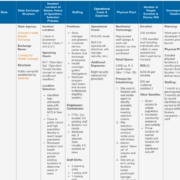
Under the assumption that such a ruling would allow APTC to be available in SBM states that use the healthcare.gov technology platform, there are existing federal-state hybrid exchange models that current FFM or SPM states could adopt to protect these subsidies. One proposed model is New Mexico’s exchange, which is a SBM that is proposing to run core exchange functions while using the healthcare.gov technology platform from the Centers for Medicare and Medicaid Services (CMS) for individual enrollments. This proposed model would allow states that declare their intent to establish a SBM to operate most core exchange functions while using the federal platform for individual enrollment and, importantly, qualify as a SBM.
| Download the Issue Brief |




 For individuals living with complex, often chronic conditions, and their families, palliative care can provide relief from symptoms, improve satisfaction and outcomes, and help address critical mental and spiritual needs during difficult times. Now more than ever, there is growing recognition of the importance of palliative care services for individuals with serious illness, such as advance care planning, pain and symptom management, care coordination, and team-based, multi-disciplinary support. These services can help patients and families cope with the symptoms and stressors of disease, better anticipate and avoid crises, and reduce unnecessary and/or unwanted care. While this model is grounded in evidence that demonstrates improved quality of life, better outcomes, and reduced cost for patients, only a fraction of individuals who could benefit from palliative care receive it.
































































