
Oral Health and the Triple Aim Toolkit
 Oral health is linked to overall health, and mounting evidence suggests that addressing oral health can help states move toward the Triple Aim goals of improving the patient experience, improving the health of populations, and reducing per-capita health care spending. Poor oral health—including high rates of tooth decay, missing teeth, and gum disease—and inadequate access to oral health services are persistent problems for low-income populations. This can lead individuals to turn to costly emergency rooms for preventable dental problems; one study estimates that these visits result in up to $2 billion in spending annually. Moreover, the effects of poor oral health are not limited to the mouth – studies have associated oral diseases with systemic health conditions including diabetes.
This toolkit contains a variety of resources for states to learn how an oral health strategy could help them work toward their goals of improving health and reducing costs. The toolkit builds on a NASHP brief, Oral Health and the Triple Aim: Evidence and Strategies to Improve Care and Reduce Costs. It summarizes research articles and policy briefs on the links between oral health and diabetes, maternal and child health, and avoidable emergency room utilization; provides case studies on state and local initiatives to bring together oral health and primary care; and provides information on policy solutions that states have implemented to improve oral health coverage and access.
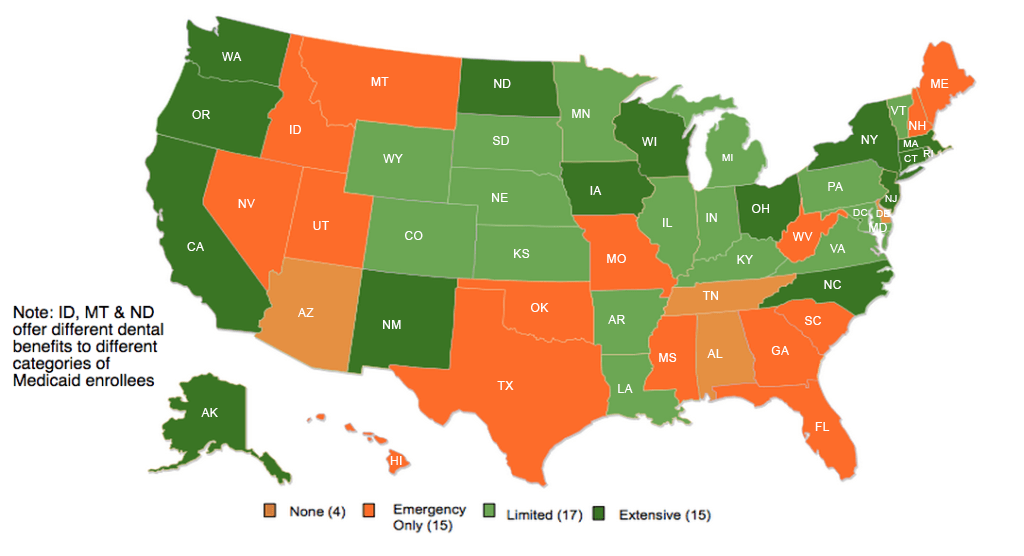
Medicaid Adult Dental Coverage map
NASHP also has resources on a range of oral health policy topics. You may also be interested in:
- Improving Integration of Dental Health Benefits in Health Insurance Marketplaces
- Help Wanted: A Policymaker’s Guide to new Dental Providers Report
- The Effects of Medicaid Reimbursement Rates on Access to Dental Care
- Reimbursing Medical Providers for Preventive Oral Health Services: State Policy Options
This toolkit was made possible with support from the Washington Dental Service Foundation.



 For individuals living with complex, often chronic conditions, and their families, palliative care can provide relief from symptoms, improve satisfaction and outcomes, and help address critical mental and spiritual needs during difficult times. Now more than ever, there is growing recognition of the importance of palliative care services for individuals with serious illness, such as advance care planning, pain and symptom management, care coordination, and team-based, multi-disciplinary support. These services can help patients and families cope with the symptoms and stressors of disease, better anticipate and avoid crises, and reduce unnecessary and/or unwanted care. While this model is grounded in evidence that demonstrates improved quality of life, better outcomes, and reduced cost for patients, only a fraction of individuals who could benefit from palliative care receive it.
































































