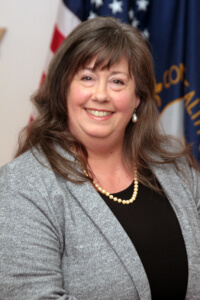
Aletha Maybank, MD, MPH recently joined the AMA in April 2019 as their inaugural Chief Health Equity Officer and Vice President. Her role is to embed health equity in all the work of the AMA and to launch a Center for Health Equity.
Prior to this in 2014, Dr. Maybank became an Associate Commissioner, and later a Deputy Commissioner, and lunched the Center for Health Equity, a new division in the NYC Department of Health and Mental Hygiene geared toward strengthening and amplifying the Health Department’s work in ending health inequities. Under her leadership, and in a short amount of time, the health department made great strides in transforming the culture and public health practice by embedding health equity in the health department’s work. This work has been recognized and adapted by other City agencies and has captured the attention of the CDC and WHO.
She also teaches medical and public health students on topics related to health inequities, public health leadership and management, physician advocacy, and community organizing health. Currently, Dr. Maybank serves as President of the Empire State Medical Association, the NYS affiliate of the National Medical Association. In 2012, she co-founded “We Are Doc McStuffins,” a movement created by African-American female physicians who are inspired by the Disney Junior character, Doc McStuffins.
Dr. Maybank holds a BA from Johns Hopkins University, an MD from Temple University School of Medicine, and an MPH from Columbia University Mailman School of Public Health. She is a pediatrician and board certified in Preventive Medicine and Public Health.
Lunch Plenary:
A Commitment to Advance Health Equity
 For individuals living with complex, often chronic conditions, and their families, palliative care can provide relief from symptoms, improve satisfaction and outcomes, and help address critical mental and spiritual needs during difficult times. Now more than ever, there is growing recognition of the importance of palliative care services for individuals with serious illness, such as advance care planning, pain and symptom management, care coordination, and team-based, multi-disciplinary support. These services can help patients and families cope with the symptoms and stressors of disease, better anticipate and avoid crises, and reduce unnecessary and/or unwanted care. While this model is grounded in evidence that demonstrates improved quality of life, better outcomes, and reduced cost for patients, only a fraction of individuals who could benefit from palliative care receive it.































































Delayed Rule Sets 2021 Playbook for Health Insurers and Insurance Marketplaces
/in Policy Blogs, Featured News Home Eligibility and Enrollment, Health Coverage and Access, State Insurance Marketplaces /by Christina CousartThe Department of Health and Human Services (HHS) has issued the final Notice of Benefit and Payment Parameters (NBPP) for 2021 — the annual rule governing health insurance plans and health insurance marketplaces. While the final rule contains several changes, it does not significantly alter automatic re-enrollment for individuals who purchase through the health insurance […]
50-State Scan Shows Diversity of State Certificate-of-Need Laws
/in Policy Blogs, Featured News Home Health System Costs, Hospital/Health System Oversight /by Johanna Butler, Adney Rakotoniaina and Deborah FournierAs states respond to the need for increased hospital bed capacity due to COVID-19, governors and legislatures in 22 states have waived certificate-of-need (CON) requirements – streamlining the process for hospitals to add bed capacity. These waivers have focused attention on decades-old CON laws and their utility in a changing health care landscape. The National […]
Q&A: A Deep Dive into New York’s Drug User Health Hubs with New York’s Allan Clear
/in COVID-19 State Action Center New York Blogs, Featured News Home Behavioral/Mental Health and SUD, Chronic and Complex Populations, Chronic Disease Prevention and Management, Health Equity, HIV/AIDS, Population Health, Social Determinants of Health /by Eliza MetteThe COVID-19 pandemic poses unique risks to people with opioid use disorder (OUD). Overdose risk increases when using individuals are in isolation and injection drug users are at higher risk of COVID-19 mortality due to increased rates of other infectious diseases and negative health effects from substance use.
States Weigh the Future of Housing Aid in a Post-COVID-19 World
/in COVID-19 State Action Center Blogs, Featured News Home COVID-19, Housing and Health, Population Health, Social Determinants of Health /by Ariella LevisohnAided by an infusion of federal relief funds for housing and other support services, many states and cities are working to provide temporary housing to individuals experiencing or at risk of homelessness to keep them healthy and protected from COVID-19. But with difficult budget decisions ahead, it is important for states to consider the future […]
Strengthening Workforce Capacity: State Actions to Address Opioid Use Disorder during COVID-19
/in COVID-19 State Action Center Blogs, Featured News Home Behavioral/Mental Health and SUD, Chronic and Complex Populations, Chronic Disease Prevention and Management, COVID-19, Health Coverage and Access, Health Equity, Physical and Behavioral Health Integration, Population Health, Social Determinants of Health, Workforce Capacity /by Kristina Long and Jodi ManzDuring the COVID-19 pandemic, the opioid epidemic has quietly raged on, requiring states to fight a costly, two-front war. While states have rallied to ensure that opioid use disorder (OUD) treatment remains accessible, organizational and workforce challenges persist and the resources and revenue needed to address them are rapidly changing. Gaps in treatment infrastructure and […]
Massachusetts Enlists Volunteers for its Contact Tracing Initiative to Curb COVID-19
/in COVID-19 State Action Center Massachusetts Blogs, Featured News Home Community Health Workers, Contact Tracing, COVID-19, Health Coverage and Access, Health Equity, Population Health, Workforce Capacity /by Chris KukkaConfronted with a shortage of test kits, rising COVID-19 cases, and pressure to reopen, many states are designing innovative contact tracing initiatives that use private and public health expertise, volunteers, and traditional phone calls to reach individuals who have been exposed to the coronavirus so they can self-isolate to stop the spread of infection.
States Establish New Telehealth Policies to Safeguard Well-Child Care and Immunizations
/in COVID-19 State Action Center Blogs, Featured News Home Chronic Disease Prevention and Management, COVID-19, EPSDT, Health Coverage and Access, Health IT/Data, Healthy Child Development, Immunization, Lead Screening and Treatment, Maternal, Child, and Adolescent Health, Population Health, Workforce Capacity /by Rebecca CooperThe COVID-19 pandemic has reduced access to children’s preventive care across the country, with some providers reporting a 70 to 80 percent decrease in well-child visits, and far fewer children receiving vital in-person services, such as immunizations. Some primary care practices also have limited their services or shut down to comply with mandatory social distancing […]
State-Based Marketplaces Lead in Increasing Access to Coverage during COVID-19
/in COVID-19 State Action Center Blogs, Featured News Home Consumer Affordability, COVID-19, Eligibility and Enrollment, Health Coverage and Access, Health Equity, Health System Costs, Population Health, State Insurance Marketplaces /by Christina CousartState Approaches to Family Caregiver Education, Training and Counseling in Medicaid Home- and Community-Based Services
/in The RAISE Act Family Caregiver Resource and Dissemination Center Charts, Featured News Home, Maps Chronic and Complex Populations, Chronic Disease Prevention and Management, Health Coverage and Access, Palliative Care, Population Health, State Resources, The RAISE Family Caregiver Resource and Dissemination Center, Workforce Capacity /by Salom TeshaleFollow the Money – A Template for States to Track Federal Relief Funds by Hospital
/in COVID-19 State Action Center Blogs, Featured News Home COVID-19, Health System Costs, Hospital/Health System Oversight, Making the Case for Action, Population Health /by Trish RileyUpdated June 12, 2020 Last week, states received a minimum of $1.25 billion from the Coronavirus Aid, Relief, and Economic Security Act (CARES Act, Title V) to use at their discretion to address issues related to the pandemic. These dollars may be used to fund necessary COVID-19-related expenses that have not been addressed in their […]