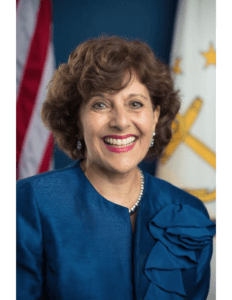
Aletha Maybank, MD, MPH recently joined the AMA in April 2019 as their inaugural Chief Health Equity Officer and Vice President. Her role is to embed health equity in all the work of the AMA and to launch a Center for Health Equity.
Prior to this in 2014, Dr. Maybank became an Associate Commissioner, and later a Deputy Commissioner, and lunched the Center for Health Equity, a new division in the NYC Department of Health and Mental Hygiene geared toward strengthening and amplifying the Health Department’s work in ending health inequities. Under her leadership, and in a short amount of time, the health department made great strides in transforming the culture and public health practice by embedding health equity in the health department’s work. This work has been recognized and adapted by other City agencies and has captured the attention of the CDC and WHO.
She also teaches medical and public health students on topics related to health inequities, public health leadership and management, physician advocacy, and community organizing health. Currently, Dr. Maybank serves as President of the Empire State Medical Association, the NYS affiliate of the National Medical Association. In 2012, she co-founded “We Are Doc McStuffins,” a movement created by African-American female physicians who are inspired by the Disney Junior character, Doc McStuffins.
Dr. Maybank holds a BA from Johns Hopkins University, an MD from Temple University School of Medicine, and an MPH from Columbia University Mailman School of Public Health. She is a pediatrician and board certified in Preventive Medicine and Public Health.
Lunch Plenary:
A Commitment to Advance Health Equity




 For individuals living with complex, often chronic conditions, and their families, palliative care can provide relief from symptoms, improve satisfaction and outcomes, and help address critical mental and spiritual needs during difficult times. Now more than ever, there is growing recognition of the importance of palliative care services for individuals with serious illness, such as advance care planning, pain and symptom management, care coordination, and team-based, multi-disciplinary support. These services can help patients and families cope with the symptoms and stressors of disease, better anticipate and avoid crises, and reduce unnecessary and/or unwanted care. While this model is grounded in evidence that demonstrates improved quality of life, better outcomes, and reduced cost for patients, only a fraction of individuals who could benefit from palliative care receive it.































































Model Legislation and Reporting Template for Hospital Financial Transparency
/in Hospital/Health System Oversight Blogs, Featured News Home Consumer Affordability, COVID-19, Health System Costs, Hospital/Health System Oversight, Population Health /by NASHP StaffYear after year, hospitals account for the largest expenditure of US health care dollars, followed by physician and clinical services, of which over half are owned by a hospital or a hospital-affiliated health system. To address rising health care costs, state policymakers and the public need detailed hospital financial information to understand a hospital’s assets […]
Q&A: How to Use NASHP’s Model Law and Template to Increase Hospital and Health Care System Financial Transparency
/in Hospital/Health System Oversight Consumer Affordability, COVID-19, Health System Costs, Hospital/Health System Oversight, Making the Case for Action, Population Health /by NASHP StaffWhat is hospital financial transparency? Hospital financial transparency describes when hospitals/health systems disclose data so the public and state regulators can understand its assets – including income from a variety of sources, such as payment for services rendered, grants, capital, and other investments – as well as its expenses and liabilities. To date, most state […]
An Act to Ensure Financial Transparency in Hospitals and Health Care Systems
/in Hospital/Health System Oversight Consumer Affordability, COVID-19, Health System Costs, Hospital/Health System Oversight, Making the Case for Action, Population Health /by NASHP StaffSummary Hospitals provide critically important services and play a central role in assuring the integrity of the health care system in the state. Standardized, objectively assessed information regarding finances enables the state and the public to evaluate the viability of the health system, identify strengths and weaknesses, to allow for appropriate executive and legislative actions […]
States Include Catch-up Routine Immunization Strategies in Back-to-School Planning
/in Policy Hawaii, Michigan, Oregon, Texas Blogs, Featured News Home Chronic Disease Prevention and Management, COVID-19, Immunization, Maternal, Child, and Adolescent Health, Population Health /by Rebecca CooperAs states consider strategies to reopen schools safely this fall, ensuring that children receive their appropriate, on-schedule vaccines continues to be an important safety and prevention strategy. Because the COVID-19 pandemic has dramatically reduced the volume of in-person children’s preventive care visits across the country – many providers have reported a 70 to 80 percent […]
States Confront Current and Future Insurance Coverage Challenges as Pandemic Persists
/in COVID-19 State Action Center, Policy Blogs, Featured News Home CHIP, COVID-19, Eligibility and Enrollment, Health Coverage and Access, Population Health, State Insurance Marketplaces /by Maureen Hensley-Quinn and Christina CousartState Medicaid, children’s health insurance programs (CHIP) and health insurance marketplaces strive to prepare for an expected increase in the demand for their services as they navigate a world roiled by COVID-19, an economic downturn and ensuing budget crises, and unpredictable federal relief efforts.
States Raise Concerns about Moving Critical COVID-19 Reporting Data from CDC to HHS
/in COVID-19 State Action Center Blogs, Featured News Home COVID-19, Health Coverage and Access, Health Equity, Health IT/Data, Population Health, Quality and Measurement, Social Determinants of Health /by Trish Riley and Jill RosenthalThe recent decision to shift daily data reported by hospital administrators about their capacity and hospital beds occupied by COVID-19 patients from the Centers for Disease Control and Prevention (CDC) to the Department of Health and Human Services’ (HHS) TeleTracking system has sparked concerns among state officials who are on the pandemic’s frontline, and infectious […]
Massachusetts Gov. Charlie Baker Is NASHP’s 2020 Annual Conference Keynote Speaker
/in #NASHPCONF20 Blogs, Featured News Home Consumer Affordability, COVID-19, Health Equity, Health System Costs, Hospital/Health System Oversight, Population Health, Total Cost of Care Benchmark /by NASHP StaffMassachusetts Gov. Charlie Baker will kick off the National Academy for State Health Policy’s 33rd annual conference with a keynote address at 4:30 p.m. (ET) Monday, Aug. 14, 2020. The conference, originally scheduled for Boston, will be delivered on-line. Massachusetts has long been a national health reform leader and Gov. Baker has played a key […]
With Deficits Looming, States Can Use NASHP Template to Track Federal Relief Funds to Hospitals
/in COVID-19 State Action Center Blogs, Featured News Home COVID-19, Health System Costs, Hospital/Health System Oversight, Population Health /by Johanna ButlerHospitals and health care providers need financial support to respond to the pandemic and for future viability. In response, Congress allocated billions of dollars in relief funds through multiple existing and new programs. The disbursement of these funds is uncoordinated and so are public reports that track where the money is going, but states need […]
States Craft Collaborative Approaches to House the Homeless and Curb COVID-19
/in COVID-19 State Action Center Ohio Blogs, Featured News Home Behavioral/Mental Health and SUD, Blending and Braiding Funding, Chronic and Complex Populations, Chronic Disease Prevention and Management, COVID-19, Health Equity, Housing and Health, Physical and Behavioral Health Integration, Population Health /by Eliza Mette and Jodi ManzPeople with substance use disorders (SUD) who are experiencing housing instability or homelessness are particularly at risk during the COVID-19 pandemic, leaving states challenged more than ever to identify effective housing strategies that can simultaneously address the complex treatment needs of people with SUD while also curbing the spread of COVID-19 in congregate settings.
States Redesign Home Visiting Programs for a Telehealth World during COVID-19
/in COVID-19 State Action Center Michigan Blogs, Featured News Home Care Coordination, Chronic and Complex Populations, Community Health Workers, COVID-19, Health Equity, Integrated Care for Children, Integrated for Pregnant/Parenting Women, Maternal Health and Mortality, Maternal, Child, and Adolescent Health, Population Health, Social Determinants of Health /by Taylor PlattAs families face immense stress from the pandemic, states have rapidly reworked their home visiting programs to continue to support women and children. Because face-to-face services, including case management and family support and counseling, are no longer an option, health departments now deliver these vital services by telehealth. But with this new operating platform, states […]