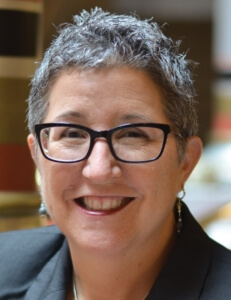
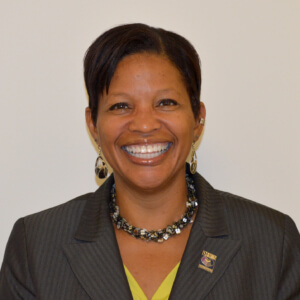
Aletha Maybank, MD, MPH recently joined the AMA in April 2019 as their inaugural Chief Health Equity Officer and Vice President. Her role is to embed health equity in all the work of the AMA and to launch a Center for Health Equity.
Prior to this in 2014, Dr. Maybank became an Associate Commissioner, and later a Deputy Commissioner, and lunched the Center for Health Equity, a new division in the NYC Department of Health and Mental Hygiene geared toward strengthening and amplifying the Health Department’s work in ending health inequities. Under her leadership, and in a short amount of time, the health department made great strides in transforming the culture and public health practice by embedding health equity in the health department’s work. This work has been recognized and adapted by other City agencies and has captured the attention of the CDC and WHO.
She also teaches medical and public health students on topics related to health inequities, public health leadership and management, physician advocacy, and community organizing health. Currently, Dr. Maybank serves as President of the Empire State Medical Association, the NYS affiliate of the National Medical Association. In 2012, she co-founded “We Are Doc McStuffins,” a movement created by African-American female physicians who are inspired by the Disney Junior character, Doc McStuffins.
Dr. Maybank holds a BA from Johns Hopkins University, an MD from Temple University School of Medicine, and an MPH from Columbia University Mailman School of Public Health. She is a pediatrician and board certified in Preventive Medicine and Public Health.
Lunch Plenary:
A Commitment to Advance Health Equity



 For individuals living with complex, often chronic conditions, and their families, palliative care can provide relief from symptoms, improve satisfaction and outcomes, and help address critical mental and spiritual needs during difficult times. Now more than ever, there is growing recognition of the importance of palliative care services for individuals with serious illness, such as advance care planning, pain and symptom management, care coordination, and team-based, multi-disciplinary support. These services can help patients and families cope with the symptoms and stressors of disease, better anticipate and avoid crises, and reduce unnecessary and/or unwanted care. While this model is grounded in evidence that demonstrates improved quality of life, better outcomes, and reduced cost for patients, only a fraction of individuals who could benefit from palliative care receive it.























































Follow the Money – A Template for States to Track Federal Relief Funds by Hospital
/in COVID-19 State Action Center Blogs, Featured News Home COVID-19, Health System Costs, Hospital/Health System Oversight, Making the Case for Action, Population Health /by Trish RileyUpdated June 12, 2020 Last week, states received a minimum of $1.25 billion from the Coronavirus Aid, Relief, and Economic Security Act (CARES Act, Title V) to use at their discretion to address issues related to the pandemic. These dollars may be used to fund necessary COVID-19-related expenses that have not been addressed in their […]
Infographic: How State Medicaid Programs Can Use Telehealth to Serve Pregnant Women during COVID-19
/in Policy Featured News Home COVID-19, Integrated for Pregnant/Parenting Women, Maternal Health and Mortality, Maternal, Child, and Adolescent Health, Medicaid Managed Care, Population Health /by Eddy Fernandez and Taylor PlattThis infographic highlights what states need to consider when providing pregnancy-related services to Medicaid enrollees through telehealth during the pandemic. Links to more tools and resources are listed below the infographic. States can use the following flexibilities and tools to increase access to pregnancy-related services via telehealth: Medicaid State Plan Disaster Relief State Plan Amendment: States can […]
State Approaches to Family Caregiver Education, Training, and Counseling
/in The RAISE Act Family Caregiver Resource and Dissemination Center Blogs, Featured News Home Chronic and Complex Populations, Chronic Disease Prevention and Management, COVID-19, Population Health, State Resources, The RAISE Family Caregiver Resource and Dissemination Center /by Salom Teshale, Eliza Mette, Paige Spradlin and Wendy Fox-GrageState Medicaid home- and community-based waivers and state plan amendments can provide critical information, counseling, and training to family caregivers. Recently, the National Academy for State Health Policy (NASHP) reviewed states’ Medicaid 1915(c) and 1115 waivers, and 1915(i) and 1915(j) state plan amendments (SPAs) that focuses on waivers and state plan amendments covering older adults […]
State Employee Health Plans Confront COVID-19
/in COVID-19 State Action Center Blogs, Featured News Home Consumer Affordability, COVID-19, Eligibility and Enrollment, Health Coverage and Access, Health System Costs, State Employee Health Plans /by Marilyn Bartlett and Maureen Hensley-QuinnState employee health plans (SEHPs), which provide health coverage for millions of public employees, their dependents, and some retirees, are making rapid changes to address the COVID-19 pandemic. This retooling of insurance plans must meet emerging federal requirements and ensure that coverage meets enrollees’ needs while managing costs and anticipating budget constraints. During a recent […]
Washington Official Details her State’s Response Plan to COVID-19 in Nursing Homes
/in COVID-19 State Action Center Washington Chronic and Complex Populations, Chronic Disease Prevention and Management, COVID-19, Long-Term Care, Population Health /by Chris KukkaIn early March, Washington State experienced the nation’s first COVID-19 nursing home* outbreak, and the state quickly developed a response plan to address outbreaks at other nursing homes. Candace Goehring is director of Residential Care Services in Washington State’s Department of Social and Health Services (DSHS), the agency that regulates and performs complaint investigations into […]
Why States Need to Follow the Federal Money to Hospitals
/in COVID-19 State Action Center Blogs, Featured News Home COVID-19, Health System Costs, Hospital/Health System Oversight, Making the Case for Action /by Trish RileyStates must be sound stewards of taxpayer dollars and the need to do so now is particularly acute as states confront financial landscapes devastated by the pandemic. Federal investments are providing relief to unemployed workers, small businesses, schools and universities, hospitals, and other health care providers. Additional funding is directed to governors to parse out […]
States’ Recent 1115 Waiver Applications Include Provisions to Support Children during the Pandemic
/in COVID-19 State Action Center Blogs, Featured News Home Care Coordination, Children/Youth with Special Health Care Needs, Children/Youth with Special Health Care Needs, Chronic and Complex Populations, COVID-19, Health Coverage and Access, Health Equity, Integrated Care for Children, Maternal, Child, and Adolescent Health, Population Health, Workforce Capacity /by Kate HonsbergerMore than a dozen states have recently submitted 1115 waiver applications that have the potential to safeguard access to care and increase support for children during the COVID-19 pandemic. If approved, these 1115 waivers would be retroactively to March 1, 2020, and expire “no later than 60 days after the end of the public health […]
States Launch Rapid Response Teams to Curb COVID-19 Outbreaks in Nursing Homes
/in COVID-19 State Action Center Maryland, Massachusetts Blogs, Featured News Home Chronic and Complex Populations, Chronic Disease Prevention and Management, COVID-19, Health Coverage and Access, Housing and Health, Long-Term Care, Population Health, Workforce Capacity /by Chris KukkaIn several states, nursing home staff and residents make up nearly half of residents who have died from COVID-19, including 55 percent of deaths caused by the coronavirus in Massachusetts. While hospitals’ personal protective equipment (PPE) shortages have been highlighted, less attention has been paid to the critical need for PPE and infection control expertise […]
Webinar: Keeping Nursing Home Residents and Staff Safe in the COVID-19 Era
/in Policy Webinars COVID-19, Population Health /by NASHP StaffStates Work to Protect Individuals Experiencing Homelessness from COVID-19
/in COVID-19 State Action Center Blogs, Featured News Home COVID-19, Housing and Health, Population Health, Social Determinants of Health /by Ariella LevisohnWith few places to self-isolate, limited access to disinfectant supplies, and overcrowded shelters that reduce residents’ ability to physically distance themselves, individuals experiencing homelessness are at unique risk for COVID-19. Recent estimates suggest that up to 40 percent of homeless individuals, many of whom have underlying health conditions, may become infected. As COVID-19 cases increase, […]