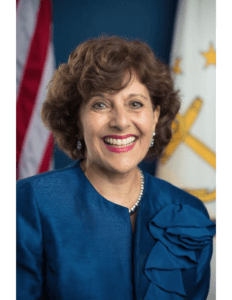
Aletha Maybank, MD, MPH recently joined the AMA in April 2019 as their inaugural Chief Health Equity Officer and Vice President. Her role is to embed health equity in all the work of the AMA and to launch a Center for Health Equity.
Prior to this in 2014, Dr. Maybank became an Associate Commissioner, and later a Deputy Commissioner, and lunched the Center for Health Equity, a new division in the NYC Department of Health and Mental Hygiene geared toward strengthening and amplifying the Health Department’s work in ending health inequities. Under her leadership, and in a short amount of time, the health department made great strides in transforming the culture and public health practice by embedding health equity in the health department’s work. This work has been recognized and adapted by other City agencies and has captured the attention of the CDC and WHO.
She also teaches medical and public health students on topics related to health inequities, public health leadership and management, physician advocacy, and community organizing health. Currently, Dr. Maybank serves as President of the Empire State Medical Association, the NYS affiliate of the National Medical Association. In 2012, she co-founded “We Are Doc McStuffins,” a movement created by African-American female physicians who are inspired by the Disney Junior character, Doc McStuffins.
Dr. Maybank holds a BA from Johns Hopkins University, an MD from Temple University School of Medicine, and an MPH from Columbia University Mailman School of Public Health. She is a pediatrician and board certified in Preventive Medicine and Public Health.
Lunch Plenary:
A Commitment to Advance Health Equity

 For individuals living with complex, often chronic conditions, and their families, palliative care can provide relief from symptoms, improve satisfaction and outcomes, and help address critical mental and spiritual needs during difficult times. Now more than ever, there is growing recognition of the importance of palliative care services for individuals with serious illness, such as advance care planning, pain and symptom management, care coordination, and team-based, multi-disciplinary support. These services can help patients and families cope with the symptoms and stressors of disease, better anticipate and avoid crises, and reduce unnecessary and/or unwanted care. While this model is grounded in evidence that demonstrates improved quality of life, better outcomes, and reduced cost for patients, only a fraction of individuals who could benefit from palliative care receive it.





























































Patient-Centered Outcome Research Institute Informs States’ Use of Telehealth
/in Policy Blogs, Featured News Home Behavioral/Mental Health and SUD, Chronic and Complex Populations, Chronic Disease Prevention and Management, Cost, Payment, and Delivery Reform, COVID-19, Population Health, Quality and Measurement, Quality and Measurement /by Amanda Attiya, Christina Cousart and Maureen Hensley-QuinnIn response to COVID-19, states have made swift and unprecedented changes to enable the use of telehealth to meet the public’s need to safely access care remotely. Now, policymakers face the challenge of analyzing whether to sustain these changes as they weigh cost, privacy, and security considerations and effectiveness of remote care delivery. As officials […]
With a Federal Eviction Moratorium in Place, States Develop Additional Protections for Low-Income Renters
/in Policy Blogs, Featured News Home COVID-19, Health Equity, Housing and Health, Population Health, Relief and Recovery, Social Determinants of Health /by Allie AtkesonLast week, the Centers for Disease Control and Prevention (CDC) issued an agency order temporarily halting residential evictions for nonpayment of rent due to COVID-19 through the end of 2020. This unprecedented action, which includes no provisions address landlords’ lost income, identifies housing as a key tool to prevent the spread of COVID-19. Alongside this […]
Three Approaches to Opioid Use Disorder Treatment in State Departments of Corrections
/in Policy Kentucky, Maine, Pennsylvania Featured News Home, Reports Behavioral/Mental Health and SUD, Chronic and Complex Populations, Chronic Disease Prevention and Management, Health Coverage and Access, Medicaid Expansion, Population Health, Social Determinants of Health /by Jodi Manz and Eliza MetteAs drug overdose fatalities continue to rise and incarceration rates remain high nationwide despite recent declines, states are increasingly developing opportunities for incarcerated individuals to access evidence-based opioid use disorder (OUD) treatment in state prison facilities. While the forced abstinence during incarceration can temporarily pause substance use itself, providing comprehensive treatment that includes medications for […]
Family Caregiving Advisory Council Refines Goals to Guide National Strategy
/in The RAISE Act Family Caregiver Resource and Dissemination Center Blogs, Featured News Home Chronic and Complex Populations, Council Meeting Materials and Resources, The RAISE Family Caregiver Resource and Dissemination Center /by Paige SpradlinThe Family Caregiving Advisory Council heard expert presentations on the intersection between the National Alzheimer’s Project Act (NAPA) Council and its own mission to guide the creation of a national caregiving strategy during its Aug. 12, 2020 meeting. The caregiving council is tasked by the Recognize, Assist, Include, Support, and Engage Family Caregivers Act of […]
Case Studies: How Tennessee and California Medicaid Programs Promote Access to Postpartum Long-Acting Reversible Contraception
/in Policy California, Tennessee Blogs, Featured News Home Health Equity, Integrated for Pregnant/Parenting Women, Maternal Health and Mortality, Maternal, Child, and Adolescent Health, Population Health, Social Determinants of Health /by Taylor PlattIncreasing women’s access to postpartum birth control has the potential to increase the health and well-being of women and their families, and immediate postpartum birth control can lead to a decrease in unplanned pregnancies, increased intervals between pregnancies, and a reduction in neonatal abstinence syndrome births (from drug exposure in the womb). Tennessee and California […]
States’ Efforts to Address Adverse Childhood Experiences Are Critical during COVID-19
/in Policy Blogs, Featured News Home Chronic and Complex Populations, COVID-19, Health Equity, Integrated Care for Children, Integrated for Pregnant/Parenting Women, Maternal, Child, and Adolescent Health, Physical and Behavioral Health Integration, Population Health, Social Determinants of Health /by Rebecca Cooper and Carrie HanlonAdverse childhood experiences (ACEs), such as poverty, food and/or housing insecurity, child abuse, neglect, and mental illness, contribute to poor health outcomes, and the pandemic’s health and economic impacts exacerbate the risk of ACEs. States are continuing to implement strategies to identify and measure ACEs and connect children to appropriate services that can mitigate potential […]
State Levers to Support Dental Care in COVID-19’s Public Health and Economic Emergency
/in Policy Blogs, Featured News Home Child Oral Health, CHIP, Chronic and Complex Populations, Chronic Disease Prevention and Management, COVID-19, Health Coverage and Access, Health Equity, Integrated Care for Children, Maternal, Child, and Adolescent Health, Medicaid Managed Care, Medicaid Managed Care, Oral Health, Population Health, Social Determinants of Health /by Allie AtkesonCOVID-19 has greatly impacted dental care and oral health access in the United States. From closed offices to an increased need for personal protective equipment (PPE), states and providers are both facing challenges to connect patients to dental care. With reduced tax revenue and looming budget crises, states are also facing difficult budget decisions – […]
State Strategies to Safely Transition Children with Special Health Care Needs Back to School
/in Policy Blogs, Featured News Home Children/Youth with Special Health Care Needs, Children/Youth with Special Health Care Needs, Chronic and Complex Populations, COVID-19, Health Equity, Maternal, Child, and Adolescent Health, Population Health, Social Determinants of Health /by Eskedar GirmashAs states explore back-to-school remote or in-person learning options, they are developing strategies to meet the needs of children and youth with special health care needs (CYSHCN) in their education and public health systems. These approaches include: Developing risk assessment tools for children and families; Increasing staffing to ensure physical distancing; Enhancing collaboration between education […]
Combat Rising Health Care Costs by Limiting Facility Fees with New NASHP Model Law
/in Model Legislation and Resources Blogs, Featured News Home Consumer Affordability, Health System Costs, Hospital/Health System Oversight, Making the Case for Action, State Employee Health Plans /by Maureen Hensley-QuinnFacility fees – designed originally to compensate hospitals for “stand-by” capacity required for emergency departments and inpatient services – are increasingly added to bills for diagnostic testing and other routine services and are raising health care costs. One state employee health plan’s claims show that facility fees charged for COVID-19 testing conducted in outpatient hospital […]
Q&A: How West Virginia Uses Partnerships to Increase Opioid Use Disorder Treatment
/in Policy West Virginia Blogs, Featured News Home Behavioral/Mental Health and SUD, Chronic and Complex Populations, Chronic Disease Prevention and Management, Physical and Behavioral Health Integration, Population Health, Social Determinants of Health /by Kristina Long, Eliza Mette and Jodi ManzThe National Academy for State Health Policy (NASHP) recently spoke to Robert Hansen, executive director of West Virginia’s Office of Drug Control Policy, to learn how the state is expanding opioid use disorder (OUD) treatment access and capacity through strategic partnerships that support its Substance Use Response Plan’s goals. West Virginia has made expanding access […]